October 16, 2026

7 Qualities to Evaluate Before Buying an Intraoral Scanner

This article has been written by Dustin Drudy

7 Qualities to Evaluate Before Buying an Intraoral Scanner

The quick answer: before buying an intraoral scanner, evaluate seven things: support and training, software, versatility, real clinical proof, total cost of ownership, warranty, and scan quality. Most dentists start with price and image quality, but support and software decide whether the scanner actually gets used every day. An open system that sends clean files to the lab of your choice protects your investment for years.


Why choosing the right intraoral scanner matters


Intraoral scanning has moved from early adopter technology to the standard of care for crown and bridge, implant, and removable workflows. Digital impressions remove trays and impression material, cut down on voids and distortion, and send cases to the lab the same day. The scanner you choose will sit in your operatory for five years or more, so the wrong choice costs far more than the purchase price. It shows up as unused equipment, retakes, and remakes. Use the checklist below whether you are buying your first scanner or replacing an older one.


The 7 qualities at a glance
Quality What to ask Red flag
Support and training Who trains my team, and how fast do they respond when I need help? Support only through a ticket system or a call center
Software Is it easy to learn, and can I export open files to any lab? Closed file formats or per-scan software fees
Versatility What indications can it scan, from single units to full arch? Limited to a few case types
Clinical proof Can I see live patient scans, not just model scans? Only lab bench or stone model demonstrations
Total cost of ownership What will it cost over five years, including fees? Required subscriptions or per-scan charges
Warranty How long is coverage, and what happens if the scanner goes down? One year coverage with no loaner or fast replacement
Scan quality How accurate are the scans, and what does my lab think of them? Your lab reports margins it cannot read
1. Support and training

Support is the most important quality, and the easiest to overlook. True support includes onboarding, chairside training for the whole team, ongoing education, and fast help when something goes wrong in the middle of a patient visit. Ask who provides the training, whether it happens in your office or online, and how quickly support responds. A scanner your team is not confident using will end up in a drawer.


2. Software


Software drives the learning curve and the day to day experience. Look at the user interface, scanning prompts and feedback, AI features such as soft tissue filtering, and how often updates are released. Just as important is the lab connection. An open system exports standard files so you can send cases to any lab without restrictions. Ask for a live demonstration rather than relying on videos.


3. Versatility


Some scanners are built for a narrow set of indications. Confirm the scanner can handle the cases you actually see: single crowns, bridges, implant scan bodies, partials, dentures, full arch, and orthodontic records. Depth of field matters here, since a deeper scan range makes posterior and hard to reach areas easier to capture. Peer groups of dentists who already use the scanner are a good place to ask how it performs across case types.


4. Clinical proof


Every scanner images a stone model well. Scanning a live patient with saliva, soft tissue, and limited access is a different test. Ask for documentation of real clinical cases such as crowns, implants, and full arch work, and talk to dentists who use the scanner every day. Real patient results are the best way to know whether the scanner performs the way the specifications suggest.


5. Total cost of ownership


Compare cost over five years, not just the purchase price. Add any subscription, software license, or per-scan fees, then subtract what you will save on impression material, shipping, retakes, adjustments, and chair time. Scanners you own outright with no recurring fees usually come out well ahead over five years. Ask every vendor for a written five year total.


6. Warranty


One year coverage has long been the norm for dental technology. Ask how long the warranty lasts, what it covers, whether an extended warranty is available and when you have to buy it, and what happens if the scanner fails. Find out whether you will receive a loaner or a replacement unit quickly, because a scanner that is out for repair stops your digital workflow.


7. Scan quality


Image quality is what your lab cares about most. Accuracy depends on the optics, the number of cameras, calibration, and the software that processes the scan. Look at accuracy specifications, self calibration, and color realism, and ask the lab you work with to review sample scans. Clean margins and contacts in the file mean better fitting restorations and fewer remakes.

The bottom line

The best intraoral scanner is the one your team will use on every case, backed by people who help you get value from it. Prioritize support and software first, confirm versatility and real clinical results, then compare five year cost, warranty, and scan quality side by side.


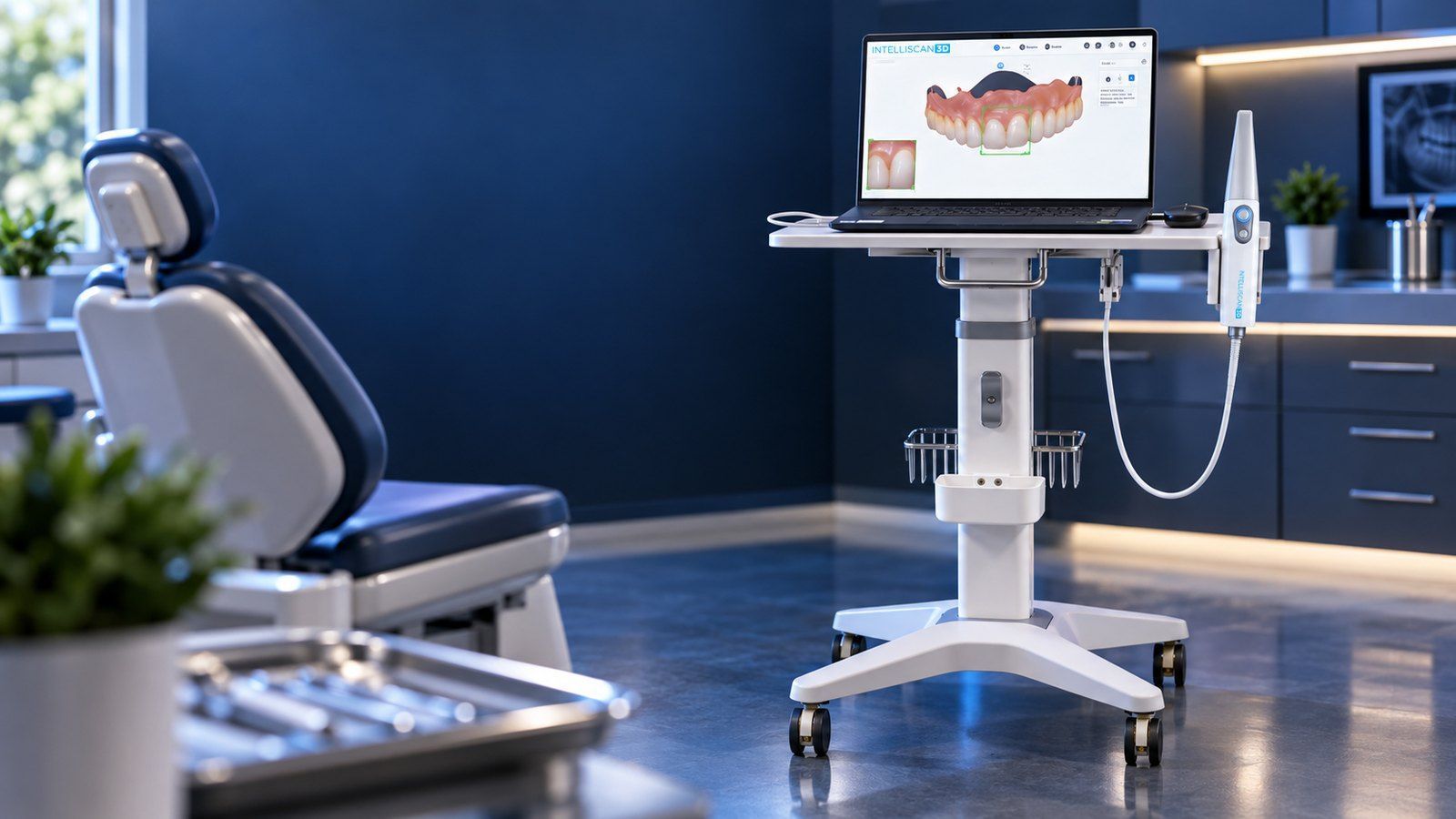
That is the approach behind the IntelliScan 3D Model Y intraoral scanner  from Bayshore Dental Studio. It delivers 10 micron scan accuracy, a 25 mm depth of field, AI soft tissue filtering, and self calibrating optics for crowns, bridges, implants, and full arch scans. It is an open system that you own outright, with no subscriptions or per-scan fees, and it is protected by a 30 day money back guarantee and a 5 year warranty. Members of  Bayshore Scans Club also get same day U.S.-based support and ongoing training and digital workflow guidance. Not sure whether you also need a mill? Read our guide to  chairside vs. lab-centered scanner workflows, or schedule an IntelliScan demo to see it on a live patient.

  • What is the most important thing to look for in an intraoral scanner?

    Support and training. Scan accuracy and price matter, but a scanner only pays off if your team uses it on every case. Look for hands-on onboarding, ongoing education, and fast, knowledgeable help when you need it.

  • How do I compare the true cost of an intraoral scanner?

    Compare the total cost over five years. Add the purchase price plus any subscription, software, or per-scan fees, then subtract savings on impression material, shipping, retakes, and chair time. Scanners you own outright with no recurring fees usually cost far less over five years.

  • Should I buy an open-system intraoral scanner?

    Yes, for most practices. An open system exports standard files so you can send digital impressions to any dental lab, which keeps you in control of quality, pricing, and turnaround. Closed systems can limit you to specific labs or software.

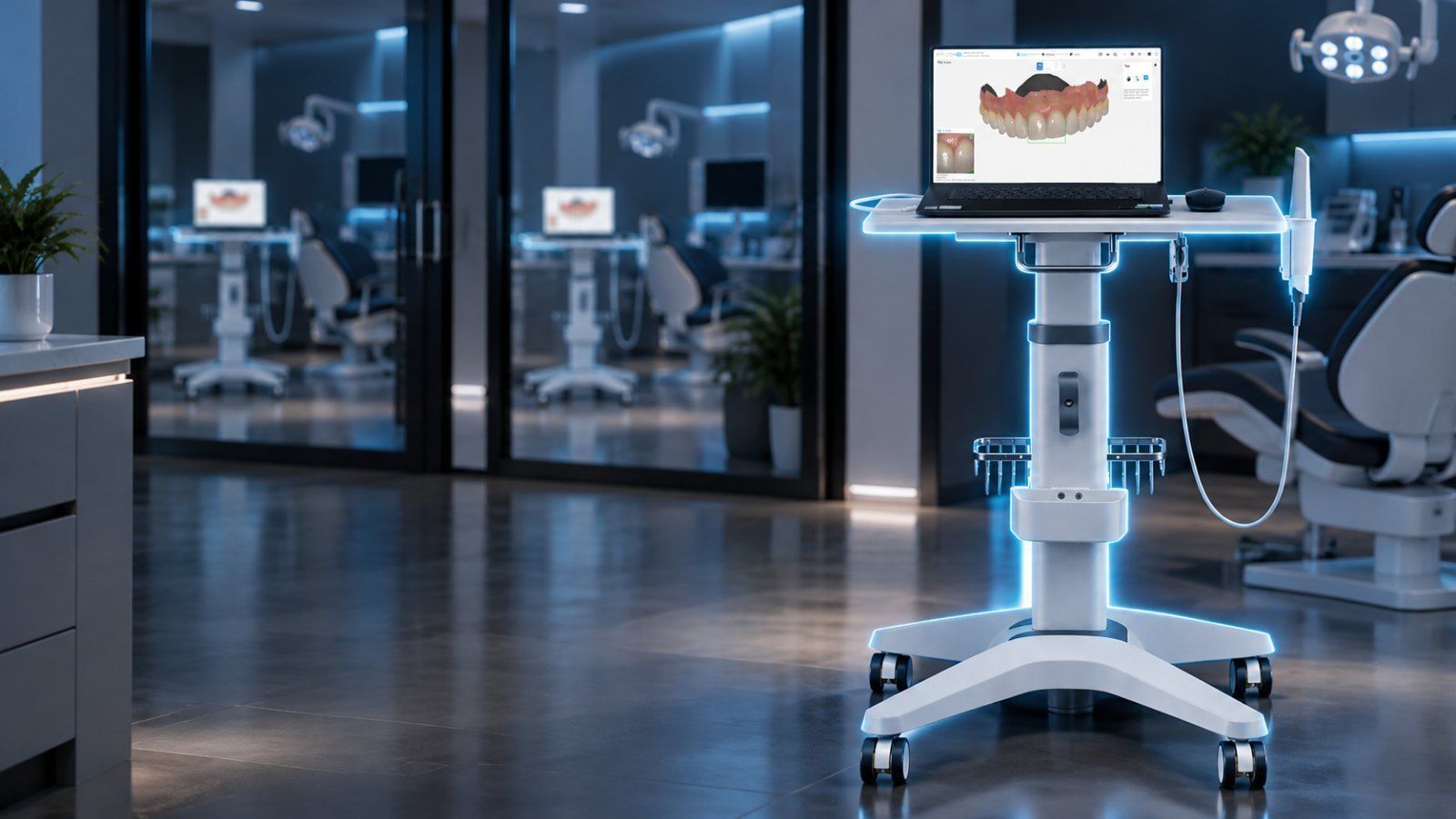
Bayshore IntelliScan 3D intraoral scanner cart in a dental operatory with matching scanners in addit
By Dustin Drudy • October 16, 2026
Should your practice own its intraoral scanners or join a scanner program? Compare 5-year cost, lab freedom, and support for multi-location groups.
By Dustin Drudy • October 15, 2026
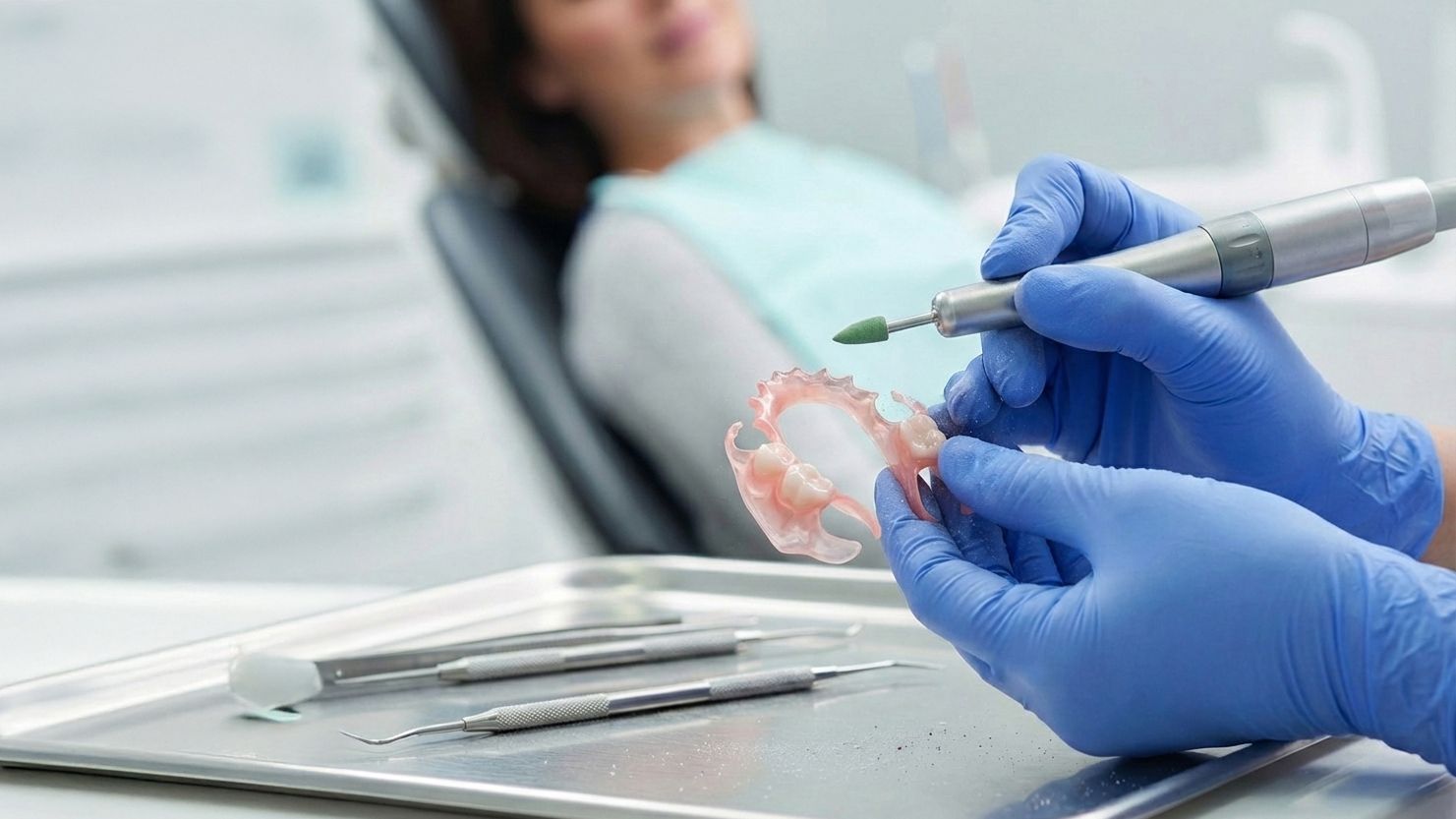
What to ask before choosing a flexible partial denture lab: rebasing, adding teeth, repairs, materials, fit, and turnaround. A practical guide for dentists.
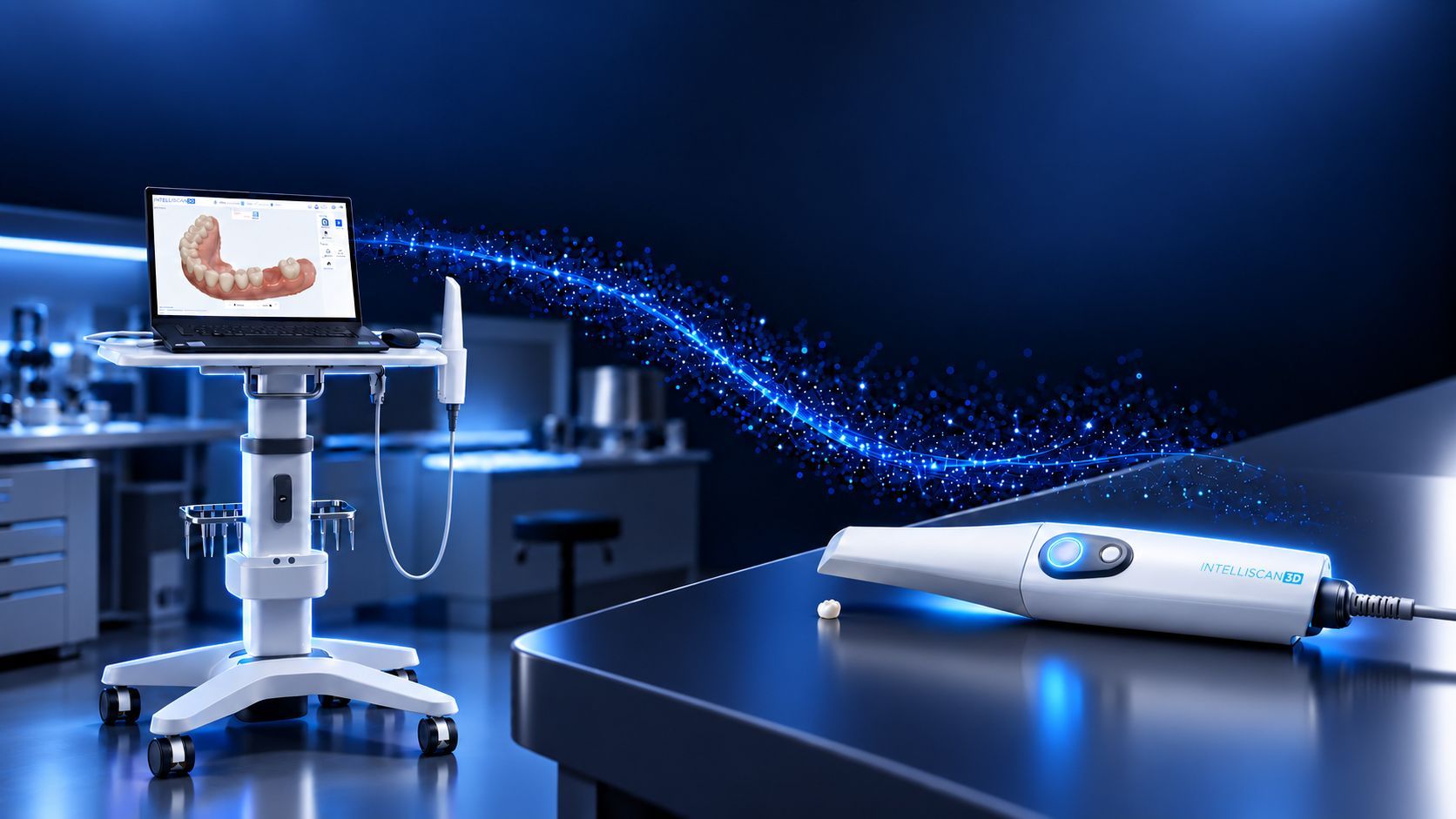
Bayshore IntelliScan 3D intraoral scanner and cart sending a digital impression to the dental lab
By Dustin Drudy • October 5, 2026
Chairside milling or a lab-centered workflow? Compare cost, team skills, turnaround, and case range to choose the right intraoral scanner workflow.
Show More
Bayshore IntelliScan 3D intraoral scanner cart in a dental operatory with matching scanners in addit
By Dustin Drudy • October 16, 2026
Should your practice own its intraoral scanners or join a scanner program? Compare 5-year cost, lab freedom, and support for multi-location groups.
By Dustin Drudy • October 15, 2026
What to ask before choosing a flexible partial denture lab: rebasing, adding teeth, repairs, materials, fit, and turnaround. A practical guide for dentists.
Bayshore IntelliScan 3D intraoral scanner and cart sending a digital impression to the dental lab
By Dustin Drudy • October 5, 2026
Chairside milling or a lab-centered workflow? Compare cost, team skills, turnaround, and case range to choose the right intraoral scanner workflow.
Show More

Share this article