Flexible Partial Dentures: 8 Questions Dentists Ask
This article has been written by Dustin Drudy

The quick answer: flexible partial dentures are a strong choice for esthetic, comfort-driven cases with good tooth support, and most of the concerns dentists raise about them come down to the system, not the category. Older flexible materials can be hard to reline, adjust, or add to. A serviceable system such as BAYFLEX from Bayshore Dental Studio can be rebased, repaired, and have teeth or clasps added in the lab, comes with a chairside adjustment guide, and can start from any open intraoral scan or a traditional impression.
1. Can flexible partial dentures be relined or rebased?
It depends on the system. Many flexible partials are difficult to reline or add to, which is why a change in the ridge can force a full remake. BAYFLEX is built to be serviced. The Bayshore Dental Studio lab can rebase a BAYFLEX partial as tissue changes, repair damaged areas, and add prosthetic teeth or flexible clasps if the patient loses another tooth. Before you prescribe any flexible partial, ask the lab whether it can be rebased and added to. If the answer is no, plan for a remake down the road.
2. Why do some dentists avoid flexible partials?
The most common reasons are practical, not clinical:
- Adjustments feel unfamiliar. Flexible materials need different burs and polishing steps than acrylic or cast metal.
- Serviceability worries. Dentists who have seen a flexible partial that could not be relined expect every flexible partial to behave that way.
- Case selection. A flexible partial placed where the case needed rigid support will disappoint everyone.
Each of these has a straightforward answer: the right adjustment technique, a serviceable system, and good case selection. The table below summarizes them.
Common flexible partial concerns at a glance
| Concern | What usually causes it | How BAYFLEX handles it |
|---|---|---|
| Hard to reline or rebase | Non-serviceable flexible materials | Rebased in the Bayshore Dental Studio lab as tissue changes |
| Patient loses another tooth | Appliance cannot be added to | Prosthetic teeth and flexible clasps added without a remake |
| Difficult chairside adjustments | Acrylic techniques used on a flexible material | BAYFLEX adjustment guide covers chairside adjustments and polishing |
| Not enough support | Flexible design used on a case that needs rigidity | BAYFLEX Hybrid adds a metal framework with flexible clasps |
| Esthetics | Visible metal clasps | Tissue-colored flexible clasps and five gingival shades |
| Material sensitivity | Acrylic monomer or metal in the appliance | Monomer free, BPA free, hypoallergenic nylon thermoplastic |
3. What causes a flexible partial to need a remake?
Most early remakes trace back to one of three things: a material that cannot be rebased when the ridge changes, an appliance that cannot be added to when the patient loses another tooth, or a design that did not have enough support for the case. Choosing a serviceable system removes the first two. Good case selection, and a hybrid design when support matters, addresses the third. For a deeper look at how serviceability differs between labs, see our guide on how to choose a flexible partial denture lab.
4. How do you adjust a flexible partial chairside?
Treat it as a different material than acrylic. Use the burs and polishing steps designed for flexible thermoplastics, and finish with a proper polish so the surface stays smooth. Bayshore Dental Studio provides a BAYFLEX adjustment guide that walks through chairside adjustments and polishing step by step. When a case needs more than a chairside adjustment, such as a rebase, a repair, or an added tooth, send the BAYFLEX partial back to the lab.
5. Are flexible partials comfortable for patients over time?
Yes, when the case is selected well. A flexible base is lightweight and adapts to the contours of the mouth, and there is no bulky metal framework or visible metal clasp. Long term comfort depends on fit, and fit changes as tissue changes. That is why serviceability matters: a BAYFLEX partial can be rebased to restore adaptation instead of being replaced.
6. Which patients are good candidates for a flexible partial?
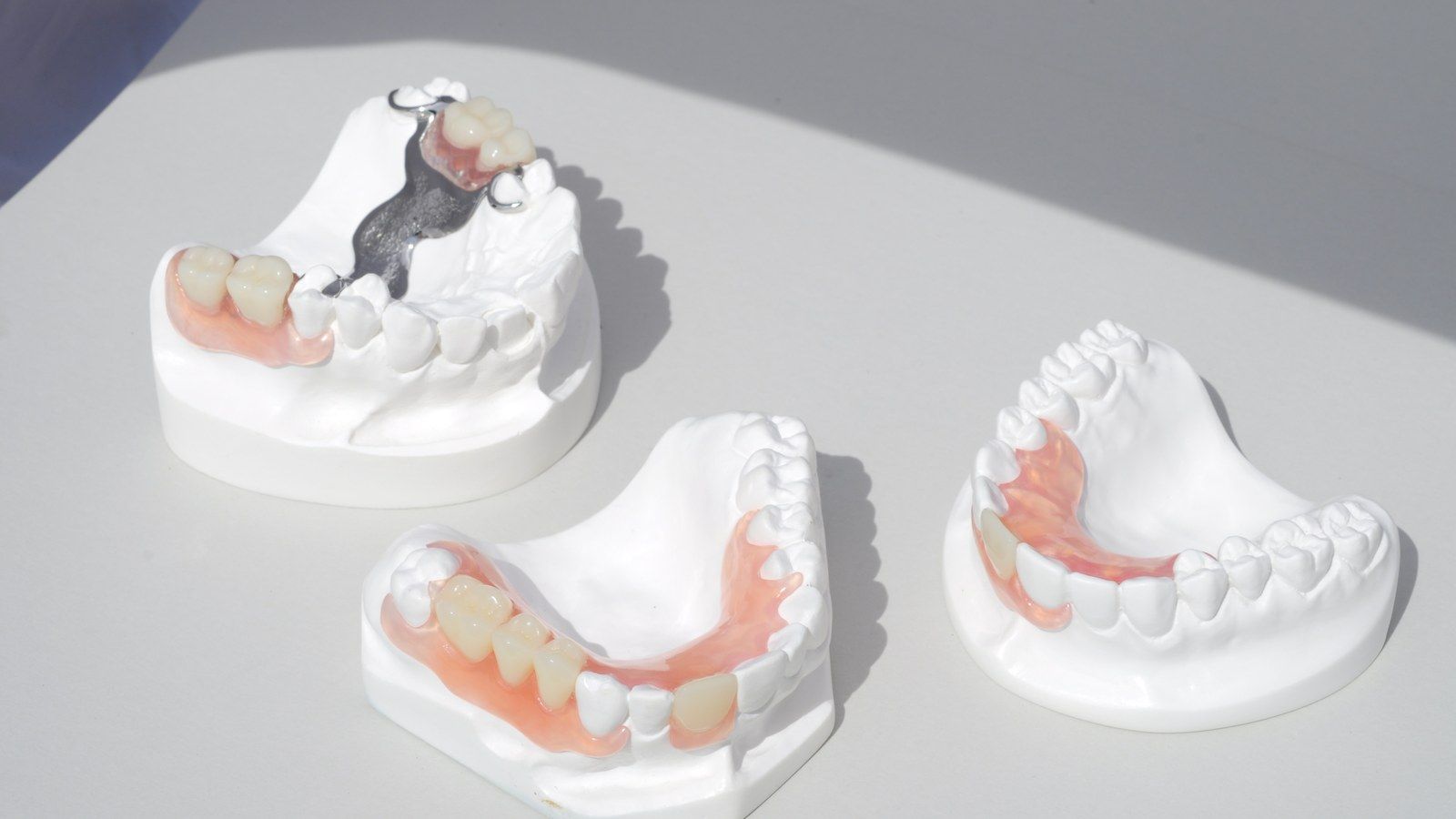
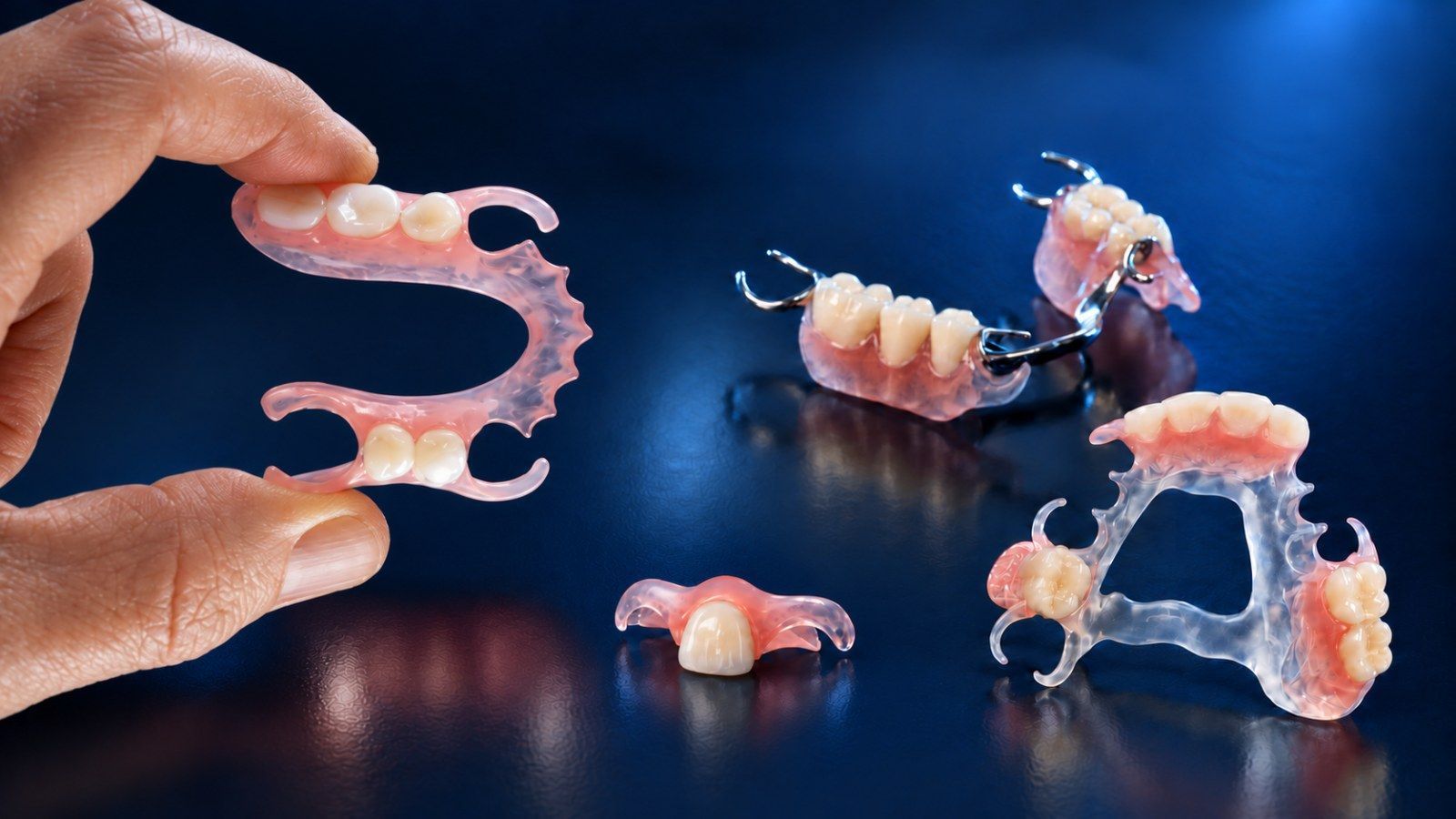
Flexible partials fit best when there is good tooth support for retention and esthetics or comfort are a priority. They are also a strong option for patients with sensitivities to acrylic monomer or metal. When a patient is missing all posterior teeth with no molar available for clasping, choose BAYFLEX Hybrid, which pairs a metal framework with flexible clasps in the esthetic zone. For long span cases where maximum rigidity is the top priority, a cast metal partial is still a valid choice. Our guide to flexible vs. metal partial dentures compares the two side by side, and the BAYFLEX partial options guide explains when to prescribe Basic, Hybrid, Single Tooth, or Clearframe.
7. Do flexible partial dentures look natural?
They can look very natural. BAYFLEX uses tissue-colored flexible clasps instead of visible metal clasps and is available in five gingival tissue shades: Crystal, Light Pink, Pink, Medium Meharry, and Dark Meharry. Prosthetic teeth and clasps can be matched in a wide range of shades. When minimizing visibility is the priority, BAYFLEX Clearframe offers a clear, metal free frame with near complete transparency.
8. Can I send a digital scan for a flexible partial?
Yes. Bayshore Dental Studio accepts BAYFLEX cases from any open intraoral scanner, including the IntelliScan 3D, as well as traditional impressions. BAYFLEX fits a two appointment workflow:
- Appointment 1: scan or impression. Capture the upper and lower arches with a bite registration.
- Appointment 2: seat. Deliver and seat the BAYFLEX partial.
Send your next flexible partial case
Bayshore Dental Studio has been a full-service dental laboratory since 1992, and BAYFLEX is recommended by 93 percent of clinicians surveyed in a Clinicians Report evaluation. Learn more on the BAYFLEX flexible partial dentures page, start from a scan through Send a Digital Case, or ship an impression through Send a Conventional Case. When you are ready, send your next BAYFLEX case to Bayshore.
Can flexible partial dentures be relined?
Some cannot, which is a common reason dentists avoid them. BAYFLEX flexible partials from Bayshore Dental Studio can be rebased in the lab as tissue changes, and can also be repaired and have teeth or clasps added without a remake.
What should I do if a patient with a flexible partial loses another tooth?
If the partial is a serviceable system such as BAYFLEX, send it to the lab. Bayshore Dental Studio can add a prosthetic tooth or a flexible clasp to the existing BAYFLEX partial, so the patient does not need a new appliance.
When should I choose a hybrid or cast metal partial instead of a fully flexible partial?
Choose BAYFLEX Hybrid when the patient is missing all posterior teeth with no molar available for clasping, since it adds a metal framework while keeping flexible clasps in the esthetic zone. Choose a cast metal partial for long span cases where maximum rigidity is the top priority.
Share this article