1. Can the partial be rebased as tissue changes?
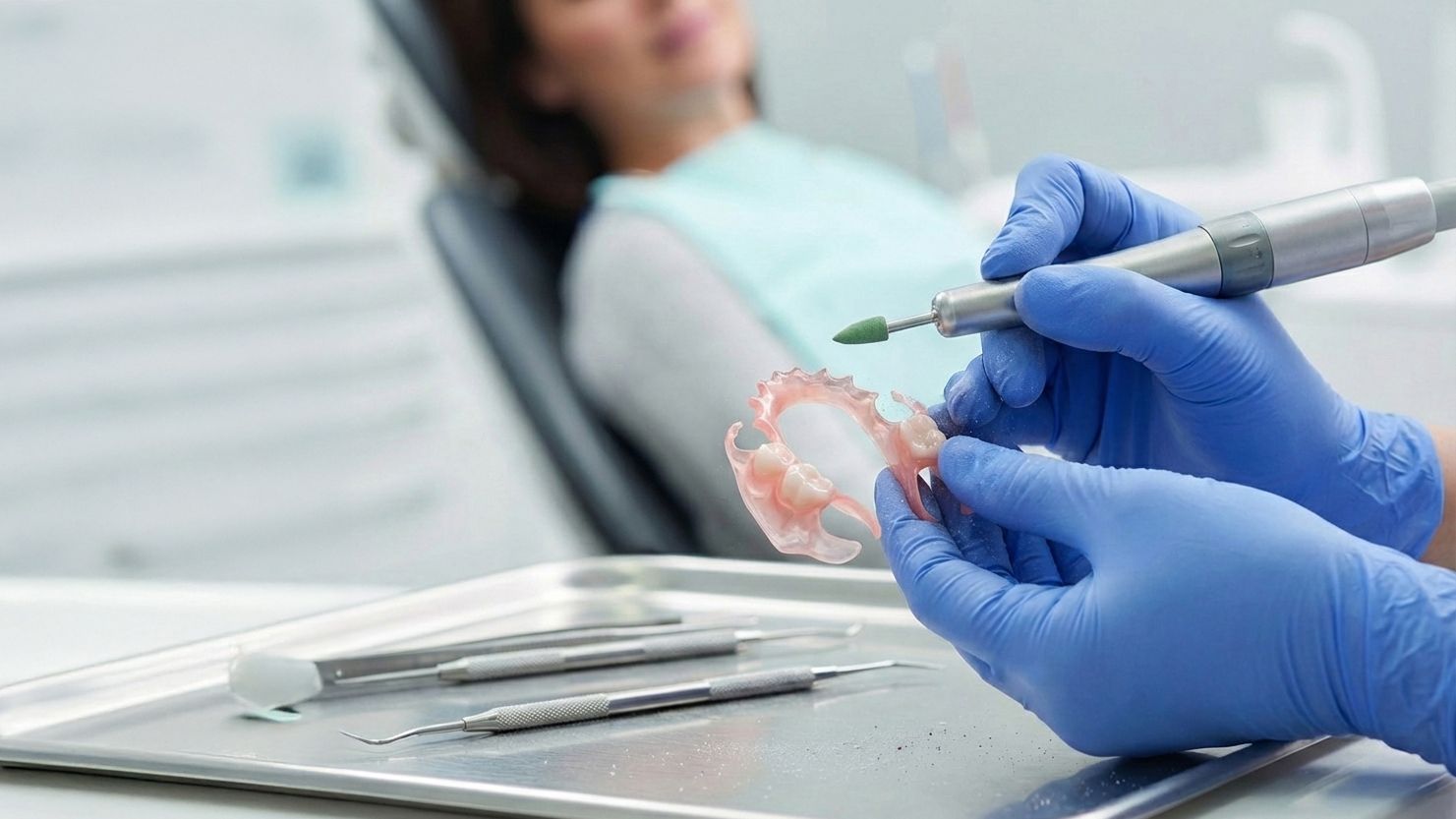
Ask directly whether the lab can rebase its flexible partials and how the process works. Rebasing restores tissue adaptation without starting over, which protects both the patient's comfort and your chair time.
2. Can teeth and clasps be added later?
This is the question that most often separates labs. If a patient loses an abutment or an adjacent tooth, you want the lab to add a prosthetic tooth or a new flexible clasp to the existing partial rather than fabricate a new one.
3. Can damaged areas be repaired?
Accidents happen. A lab that can repair a flexible partial gets the patient back to function quickly and avoids the cost and delay of a full remake.
4. What material is the partial made from?
Material choice affects comfort, staining, and biocompatibility. Look for a resilient, high performance thermoplastic that is monomer free, BPA free, and hypoallergenic, with a metal free framework, especially for patients with sensitivities to the monomer in acrylic or to metal. Stain resistance and the availability of multiple tissue shades also support a more natural, longer lasting esthetic result.
5. Does the lab offer more than one design?
One design does not fit every mouth. A capable lab should offer:
- A standard flexible partial for most partially edentulous cases
- A hybrid design that pairs a metal framework with flexible clasps for cases needing more support, such as patients missing all posterior teeth
- A single tooth flexible partial for interim restorations and implant healing
- A clear, semi-rigid, metal free frame option with a tooth supported framework when minimizing visibility is the priority
6. How easy is it to submit cases and communicate?
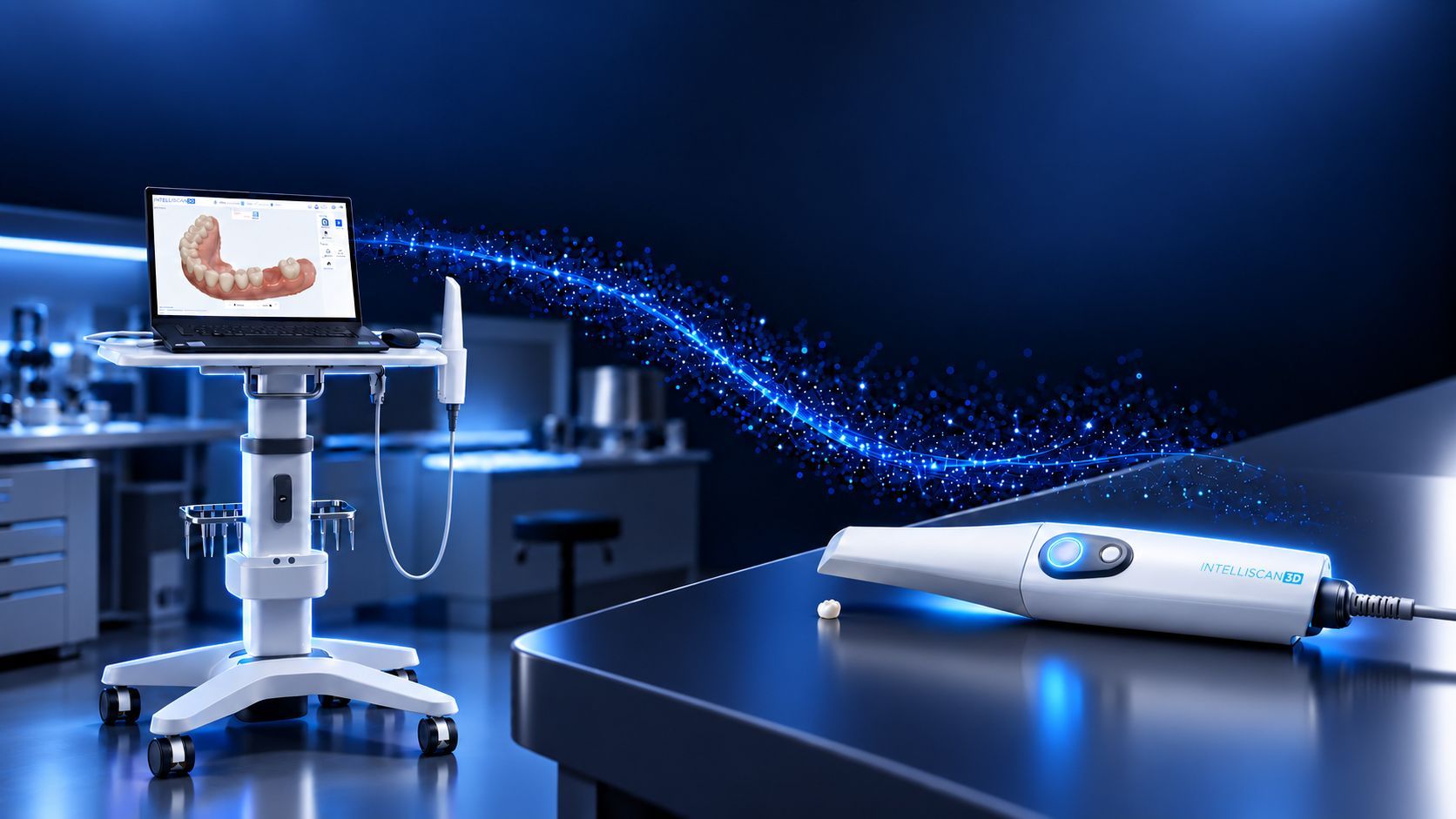
Predictable fit starts with good records and clear communication. Ask whether the lab accepts digital scans as well as conventional impressions, whether cases can be submitted and tracked through an online portal, and whether you can talk to a technician about design questions. A streamlined two appointment workflow, scan or impression with bite registration and then seating, keeps cases moving.
7. What do other dentists say about the lab's partials?
Independent clinician evaluations and peer recommendations are among the best predictors of fit consistency and remake risk. Ask the lab for published evaluations, and talk to colleagues about turnaround and how often their partials seat without major adjustments.
The bottom line
The right flexible partial lab gives you a partial that can grow with the patient: rebasable, repairable, and able to accept new teeth and clasps, made from a comfortable, biocompatible material, and backed by consistent fit and responsive communication.
That is exactly how Bayshore Dental Studio built
BAYFLEX flexible partial dentures. BAYFLEX is a serviceable, metal free system made from an extremely resilient, high performance nylon thermoplastic that is monomer free, BPA free, hypoallergenic, and highly stain resistant. With no visible metal clasps, a properly fitted BAYFLEX partial is nearly undetectable in the mouth. Every BAYFLEX partial can be rebased, repaired, and expanded with additional teeth or clasps as your patient's needs change, without remaking the appliance. Options include BAYFLEX Basic, BAYFLEX Hybrid, BAYFLEX Single Tooth, and
BAYFLEX Clearframe, a semi-rigid, clear, metal free upgrade to acrylic and metal frameworks that is also easy to repair and rebase in the lab, with five tissue shades and a two appointment workflow from a scan with the
IntelliScan 3D
or a traditional impression. BAYFLEX is recommended by 93 percent of clinicians surveyed in a Clinicians Report evaluation.
Send your next BAYFLEX case to Bayshore.